Wu Dawang’s Arranged Demobilization and Move to the City
Serve the People!Wu Dawang’s Arranged Demobilization and Move to the City is the final institutional reward for a career shaped by a marriage bargain, personal patronage and the dissolution of his Division. The army arranges work and housing for him and his family, then publicly presents his departure as a model of selfless service; the smoothness of the process conceals how little control he has over its causes or meaning.
Causes and Background
Before his marriage to Zhao Ezi, Wu Dawang pledged in writing to earn commendations within a year, join the Party within two and become an official within three. If he failed to secure a home for her in the city, where she could eat steamed rolls every day, he promised never to return to Wujiagou unless she permitted it, and to serve her as she chose. The pledge made advancement a condition of domestic life, not simply a private ambition.
His early military prospects did not meet the deadlines. He worked without earning a commendation and then struggled without admission to the Party. Letters from Zhao Ezi and her father asking about his progress intensified his panic; when his name again failed to appear among new Party members and those commended, he contemplated suicide. A vacant sergeant’s post in the Catering Squad offered one route upward. The duties were unpleasant, but soldiers doing them were known to advance quickly. Wu Dawang obtained a place in the squad and, over the next year and a half, became a full sergeant, joined the Party and received commendations. Promotion to officialdom remained elusive.
His subsequent assignment to the Division Commander’s household further improved his prospects. Liu Lian told Wu Dawang’s Captain and Political Instructor that she did not want to be alone in the house at night while her husband was away in Beijing, and asked that Wu Dawang sleep there. His superiors agreed, treating his conduct as a matter that reflected on the company. The arrangement gave the affair between Wu Dawang and Liu Lian an official cover: the household duties continued in public, while the relationship behind them changed. Liu Lian also assured him that although promotions were suspended, she would help arrange for his family to join him in the city when they resumed.
The decisive change came when the Division Commander volunteered his Division for a pilot scheme to streamline and restructure the army. The practical outcome was disbandment. Most companies were to be demobilized and others transferred, so promotions were cancelled. Wu Dawang’s hoped-for route to officialdom was again blocked, this time by the reorganization itself. Yet the Division Commander instructed that an exception be made for him: a city job was to be arranged in his native province, with a move for his family and work for his wife. This assistance was explicitly connected to the Commander and Liu Lian’s regard for him, even as the formal machinery of military restructuring determined the terms of his departure.
Arrangements and Departure
After Wu Dawang returned to barracks from leave, the Political Instructor explained that Liu Lian had personally requested three months of home leave for him because of serious family problems. The Division’s restructuring also meant that the household had seen a high turnover of orderlies. Although they had acted cautiously and Liu Lian had tried to smooth matters over, each had somehow incurred the Commander’s anger. Wu Dawang was therefore told not to return to his former post or visit the household unless there was pressing need. He took relief from this warning as evidence that his affair remained undiscovered.
The arrangements for his civilian future moved quickly. Within a week, Wu Dawang and his family had been assigned work and housing in the city nearest their village. While other soldiers worried about what restructuring would mean for them, he needed only to complete and sign the forms the military authorities gave him. The contrast was sharp: for many comrades, disbandment threatened a return to homes with few prospects; for Wu Dawang, an exception and a prepared destination made the transition appear almost effortless.
Three days after he withdrew to his dormitory, Wu Dawang received formal notification of demobilization. His superiors then told him that he had been assigned to the East is Red Tractor Factory, described as the city’s biggest factory. The Captain urged him not to spend money celebrating, since city life was expensive, and instructed him to pack and catch a train that evening so he could report to work two days later. The officers helped bundle his luggage. Boxes, wooden crates and rope had already been supplied, and the Division had settled the details of his departure before he could shape them himself.
The speed and completeness of the arrangements gave the departure the character of an expulsion managed as a benefit. The night train was not due until 12:30, so the company held a lavish farewell supper and meeting. The timing left room for an elaborate public account of why Wu Dawang was leaving, even though the essential decision and its practical consequences had already been settled.
Public Recognition and Private Meaning
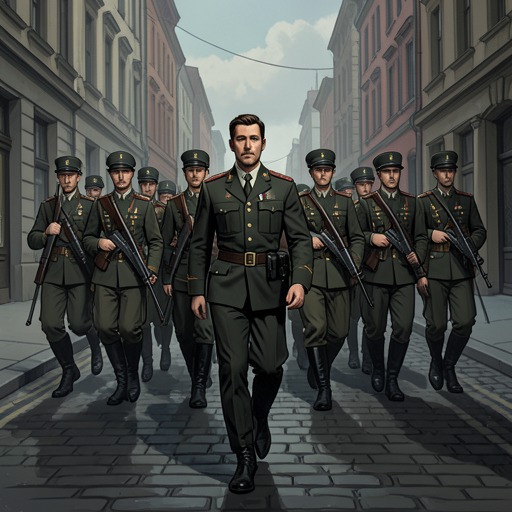
The company’s hundred soldiers remained in the mess in full uniform after dinner, seated on small stools while songs were sung and quotations from Mao Zedong recited. The Political Instructor announced Wu Dawang’s special early discharge for a factory job in the city. The company met the news with silent astonishment. The Head of Management, unusually present in person, then announced that Wu Dawang would receive the Third Order of Merit.
The ceremony made his private route to a city livelihood legible as a public lesson. The Head of Management attributed Wu Dawang’s distinction to diligent study of Mao’s writings, revolutionary thought and excellent moral character, and named him an Exemplary Servant of the People—the only soldier in the Division to receive that accolade. He framed the state-allocated job as a consequence of serving the People wholeheartedly. Wu Dawang, his Captain and his Political Instructor had not known beforehand that the evening would end with this award, underscoring the gap between the prepared personnel decision and its improvised public explanation.
The officers urged the company to learn from Wu Dawang and said that those who served the People selflessly would be helped by the army to continue contributing to socialism. Wu Dawang made no speech. When called on to address his comrades, he bowed impassively, accepted the badge and saluted the officers on the stage. The ceremony offered him formal honour but did not give him a voice in defining the reasons for his success.
This public version sat uneasily beside the private and administrative circumstances. The promotion he had pursued for years was not the reward that finally opened the city to him; his Division was being dismantled, advancement had been suspended, and his exceptional placement followed the influence of the Commander and Liu Lian. At the same time, the official presentation did not simply erase the reality of his assigned work: it converted the practical solution of a job into proof of exemplary service. The event thus joins patronage, bureaucracy and ideological ceremony without resolving their contradictions.
Aftermath and Significance
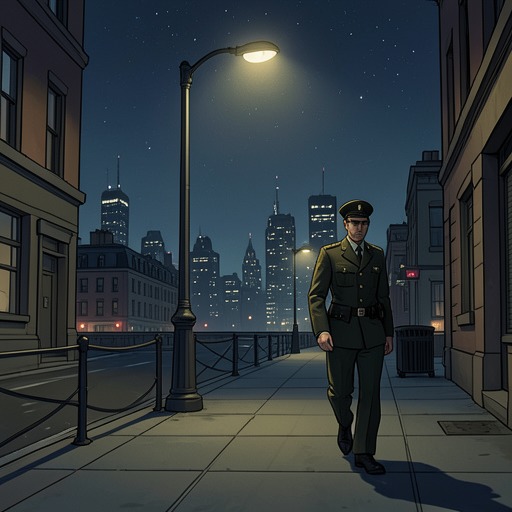
As the Division emptied, Wu Dawang stood at the deserted barracks’ main door beneath a vermilion sunset. He felt little of the grief he believed he owed the departing Machine Gunners; what hurt him was being forbidden to return to the Commander’s house. The contrast revealed where his attention had settled: collective disbandment shaped the setting of his departure, but his strongest attachment remained to Liu Lian.
The Head of Management reinforced the connection between that attachment and Wu Dawang’s good fortune. When Wu signed his job assignment form, the official patted his shoulder and remarked, “Thanks to Liu Lian,” he had come out better than the rest. The remark left Wu Dawang turning over its meaning. He increasingly suspected that his affair had been part of a plan choreographed behind the scenes, though the suspicion did not displace his longing or his romantic memories. The job and housing secured his future while making the circumstances of that security harder for him to interpret.
At the station, the entire company came out to shake his hand, congratulate him and wish him well. Their imagined lesson was that, if they remained in the army, they would try to serve the People as he had. Wu Dawang did not answer with a speech; he shook hands and said farewell. He had intended not to cry, but began to weep when the jeep’s engine started and his last journey out of barracks began. His departure completed the transformation promised in the written pledge—an urban life for his family—even though he had not attained the official position he had once treated as its necessary step.
The demobilization therefore closes one path while completing another. The Division’s reorganization ends Wu Dawang’s army career early; the job at the East is Red Tractor Factory and the family’s city arrangements carry him into civilian life. Yet the award’s rhetoric of merit cannot fully explain why he was singled out, and his own understanding remains entangled with his relationship with Liu Lian. The orderly paperwork, the stage-managed farewell and his tears at departure make the event both a material rescue from uncertainty and an uneasy ending to a life whose rewards were arranged above his head.